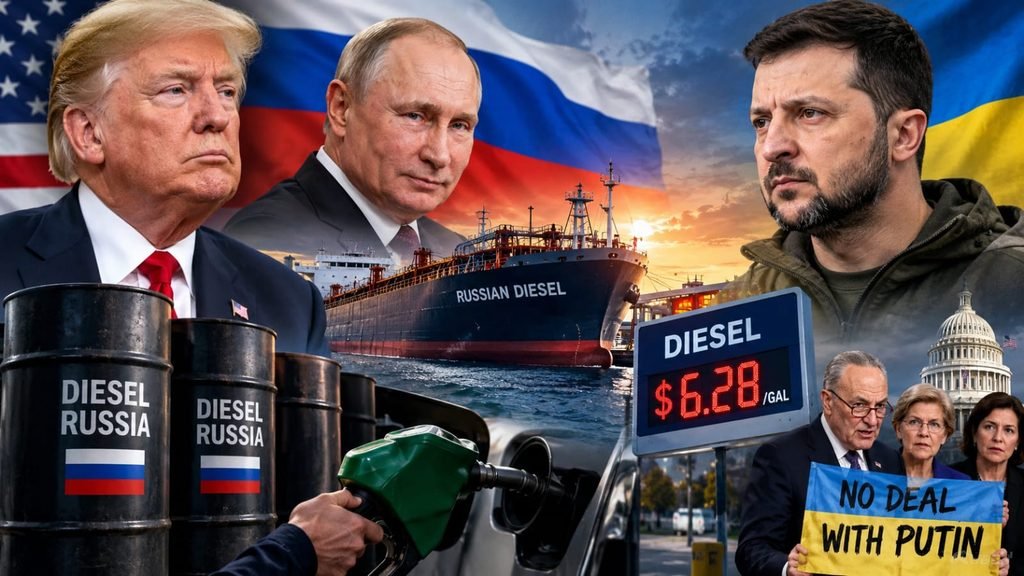
Trump’s Russian diesel deal draws fire from Kyiv and Congress as fuel prices bite
A temporary sanctions waiver is meant to ease pump prices before the midterms. Critics say it hands Moscow revenue at a delicate moment in peace diplomacy, and analysts doubt it will move prices much.
On Friday evening, President Donald Trump announced he had struck an arrangement with Vladimir Putin that would put Russian diesel back into American and global supply chains. Hours later, the US had relaxed its own restrictions to clear the path. By the weekend, Ukraine’s leadership and some US senators were calling it a strategic mistake.
What was announced
After a call with Putin, Trump took to Truth Social with the news. Russia, he wrote, would start sending more than 300,000 tons of diesel to American and global buyers right away, followed by another 500,000 tons in November. Then came a much bigger number: 3 million tons, due “within a short period of time,” in his words.
The Treasury Department moved quickly. Its Office of Foreign Assets Control said it was issuing a temporary general license, at the president’s direction, to permit the supply of Russian diesel to the global market. The license, numbered 135, authorizes the sale, delivery, offloading and importation of Russian diesel through April 7, 2027.
Many practical details are missing. The White House did not immediately say who would pay for the fuel or when deliveries would begin. Washington also hasn’t explained what Russia gets in exchange, if anything.
Why now
The timing is driven by fuel costs. AAA put the average US diesel price at $6.28 a gallon on Friday, against $3.68 a year earlier. The Hill reported that Trump has framed the deal as relief for farmers, ranchers and truckers, with midterm elections next month. The administration also links high prices to the war with Iran. Trump said that, combined with what he called total control of the Strait of Hormuz, the arrangement would bring prices down quickly.
Russia’s own position is a complication. Kremlin spokesman Dmitry Peskov said in late September that Russian diesel could flood international markets, but only if it arrived without sanctions or restrictions. Friday’s license effectively grants that condition for six months.
Kyiv’s reaction
Kyiv’s answer came the same day, and it was blunt. President Volodymyr Zelensky rejected the move outright. “Gifts to Putin will not bring peace,” he wrote on X, adding that Russia would repay the diesel with further terror. He also pointed to the timing. Ukrainian negotiators were meeting US counterparts in Miami when the deal was announced, and Zelensky said his team was being used as a “smokescreen.”
Zelensky argued the revenue would fund the war. He said sales of Russian diesel mean more money for the war and more suffering for Ukrainians. Kyiv, he suggested, is not closed to giving something up itself. He said Ukraine has told Trump envoys Jared Kushner and Steve Witkoff it is ready for symmetrical de-escalation, and that Ukraine would not strike Russian refineries if Russia stopped destroying Ukrainian energy infrastructure.
That last point goes to a disagreement over cause and effect. Trump has blamed Ukrainian drone strikes on Russian refineries for part of the price surge. Ukraine’s sanctions commissioner, Vladyslav Vlasiuk, said the waiver could undercut that argument. Whether Russia could deliver the promised volumes while its refineries are under attack is also uncertain, and the White House has not said.
A reversal on sanctions
The deal arrives only weeks after Trump signed bipartisan legislation expanding sanctions on Russia’s energy sector. Euronews noted that the law targets major importers of Russian oil and gas and that it is unclear whether the administration will impose further sanctions this month as the legislation requires.
Some Democratic senators were blunt. Jeanne Shaheen, Chuck Schumer and Elizabeth Warren called the six-month authorization a betrayal of Ukraine, European allies and American national security. A former Treasury sanctions official read the move as a signal. Kerri Bitsoff, formerly of OFAC, said it shows Trump is prioritizing the Iran conflict over pressure on Russia and likely does not plan to use many of the new law’s powers.
The administration has not yet answered these criticisms in detail. The sources reviewed here include no White House response to the senators.
Will it lower prices?
Several observers doubt it. One analyst told Axios the projected Russian volumes are uncertain to materialize, small, and not enough to address the global diesel shortage. A European diplomat told the Kyiv Independent the deal is unlikely to have a real price impact, but that the symbolism would matter.
Scale is the first problem. Set 300,000 tons next to a diesel market that burns through millions of barrels every single day, and it looks like a drop in a very large tank. Trump also gave no timetable for the 3 million tons he talked about. Meanwhile, the price at the pump follows refinery capacity, Middle East supply and the time of year. One license doesn’t touch any of those. The figures above come from the administration’s announcement. Nobody has independently confirmed that Russia can or will deliver them.
Peace talks and what to watch
The announcement came while diplomacy was already on shaky ground. Ukrainian officials had gone to Florida hoping to make progress toward ending the war. Friday’s announcement suggests Washington is treating energy markets and the Russia file as linked, which Kyiv sees as a cost to its leverage. Put plainly, Moscow gets sanctions relief before agreeing to any ceasefire.
Several things will show whether the deal matters in practice:
Whether Russian cargoes actually reach buyers, and in what volumes, over the coming weeks.
Whether AAA’s diesel average moves, and whether any move can be attributed to this deal rather than to Gulf supply or seasonal demand.
Whether the administration imposes the further sanctions the new law calls for, or lets the deadline pass.
Whether Congress responds, given the bipartisan nature of the original sanctions bill.
Whether the “symmetrical de-escalation” idea gets any traction between Kyiv and Moscow.
The license is temporary, and the clock runs to April 7. For Trump, the political value may be more immediate than the economic one, since voters will weigh fuel costs next month. For Ukraine and its European supporters, the concern is the opposite: that short-term price relief at home comes at the expense of the pressure campaign meant to end the war.