
A Refugee Ceiling Built Around One Group: What America’s 2027 Plan Means for Everyone Else
Washington’s new admissions target is a fraction of past levels, and most of it is reserved for white South Africans. Aid groups say that leaves other approved applicants with almost no way in.
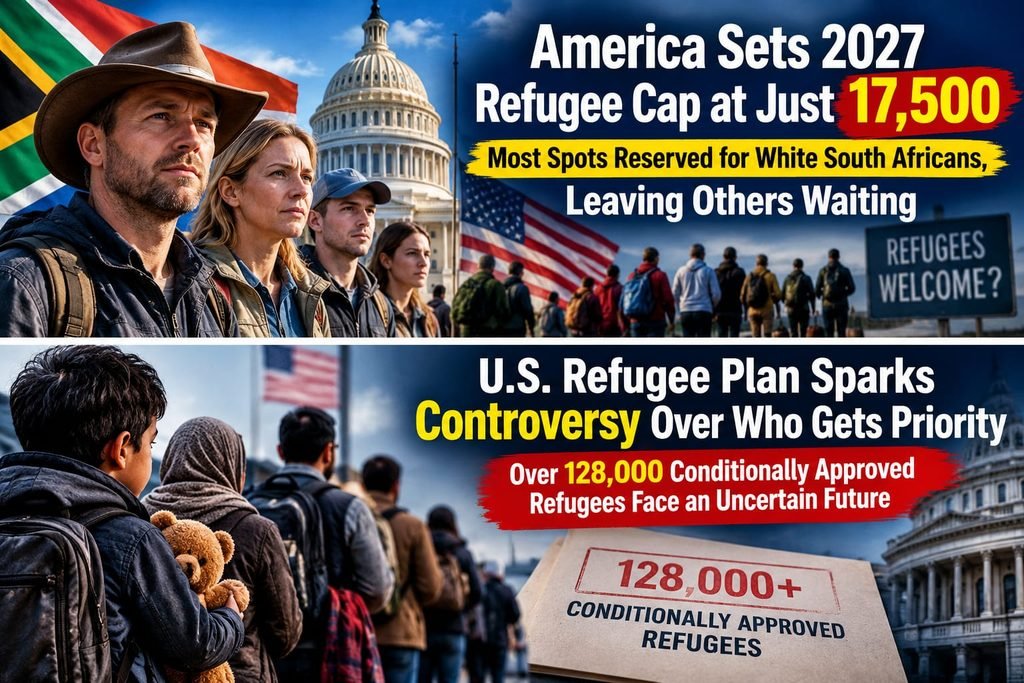
Washington has set its refugee ceiling for the fiscal year that opened on October 1 at 17,500 people, and most of those places are meant for Afrikaners from South Africa. Congress heard the news a little earlier. The State Department notified lawmakers on September 22, about a week before the year began. (rescue) (bizlegalservices)
The number is small by historical standards, but the allocation is what has drawn the most attention. It also leaves a large question for refugees who were already approved and waiting.
How the number got here
Each year the president signs a determination setting the ceiling, after reviewing global conditions and consulting Congress. Recent numbers have bounced around. Under Biden the ceiling stood at 125,000. Researcher Austin Kocher, going through federal data, counted 100,034 admissions in fiscal 2024, then just 38,102 the following year. (Who decides how many refugees come to the US? +2)
Under President Trump, the fiscal 2026 ceiling began at 7,500, the lowest since the program began. A May emergency determination raised it to 17,500 and gave all 10,000 additional places to Afrikaners. The 2027 figure keeps that higher number. (christianitytoday) (inkl)
This is a very different program from the one that, by HIAS’s count, averaged more than 92,000 admissions a year from 1980 to 2025. (rescue)
The administration’s rationale
The administration says the Afrikaner priority is a humanitarian response. President Trump has described an “unforeseen emergency refugee situation” in South Africa, citing racially motivated violence. Supporters of the policy point to farm attacks and to South African land-reform laws, which they say disadvantage white landowners. The administration has cited land reform and violent crime as its justification. One defense of the program, published by a South African farming outlet, argues that farm murders involve planning and extreme brutality unlike ordinary urban crime, and that farmers’ fears are legitimate. (New Refugee Cap a Blow to Persecuted Religious Minorities – Christianity Today +2)
The State Department says the resettlement effort will cost about $500 million, according to the administration’s own estimate to Congress. The department has also offered initial resettlement grants of up to $4,500 per person, according to South African press reports of the notice. (inkl) (sapeople)
What the evidence shows
The factual picture behind the persecution claim is contested. South Africa’s government rejects it. Pretoria condemns farm attacks but says the cause is being mischaracterized, and that the attacks are part of the country’s broader struggle with crime. (yahoo)
Crime data supports part of that argument. Farm murders have been recorded, but they account for less than 1% of South Africa’s more than 27,000 annual murders. Police figures for April 2022 to March 2023 counted 51 farm murders out of 27,494 killings nationwide. The numbers have limits, though. Journalist Nechama Brodie notes that police have not always counted farm murders consistently. Farmers’ groups put the annual toll at about 50 or fewer. Analysts at South Africa’s Institute for Security Studies have been blunt about the broader claim. Gareth Newham of the institute called the idea of a “white genocide” completely false. (fact checking trumps claims of white farmer genocide in south africa +3)
Critics in Washington have also questioned the policy’s logic. Sen. Jeanne Shaheen argued earlier this year that it put Afrikaners ahead of at-risk Afghan allies, noting that the UN refugee agency does not classify white South Africans as a persecuted group. (sapeople)
The people left waiting
The International Rescue Committee puts it bluntly: no slots go to refugees fleeing danger anywhere else in the world. It notes that the determination comes with the January 2025 suspension order and the 2025 travel bans still in force, and that the wider refugee program stays paused except in cases of national interest. (U.S. allocates refugee resettlement slots to a single nationality +2)
The IRC’s Kennji Kizuka points out that the determination says “primarily” for Afrikaners, rather than exclusively. In practice, though, advocates say the carve-outs are narrow. The International Refugee Assistance Project argues the policy blocks vulnerable refugees from resettlement and denies them even the chance to apply for an exception. Some trade reports say applicants from Afghanistan, Sudan, the Republic of Congo and Myanmar have been shut out. That claim comes from a partisan outlet that supports the administration’s approach, so it should be read with that in mind. (New Refugee Cap a Blow to Persecuted Religious Minorities – Christianity Today +2)
The scale of the backlog matters here. The administration has acknowledged that more than 128,000 people had been conditionally approved for refugee status before the suspension. Refugee processing can take years, which is why advocates stress how much those approvals represented. (christiancentury)
What the courts have said
Legal challenges have not so far reopened the door. On March 5, the Ninth Circuit Court of Appeals ruled in Pacito v. Trump. It held that the president has the power to suspend refugee admissions, and that nothing in the Refugee Act bars it. The court did hand refugee groups a partial win. It affirmed that the government must keep funding domestic resettlement services for refugees already in the country. (jurist) (jurist)
Advocates say the fight is not over. Refugee Council USA called the decision a step toward denying refugees a safe place to call home, but said it was not the end of the road. The case could still reach the Supreme Court. (rcusa) (jurist)
What to watch
The first thing to watch is whether the Afrikaner slots actually get filled. Earlier reporting raised doubts about demand, and the administration’s own fiscal 2026 figures should say more about how many people the program really reached. Next is whether any exceptions are granted to approved refugees from other countries, and whether anyone explains how those exceptions are supposed to work. Last, Congress is consulted on the ceiling but doesn’t set it, so it’s worth seeing whether lawmakers push back, or whether the appeals litigation ends up going a different way.
For now, the shape of the policy is plain, even if the reasons behind it are argued over. A refugee system once built around global need now centers on a single group, with a ceiling well under its historical norm. Supporters call it a targeted answer to a real threat. Critics say politics has pushed need aside. The people waiting abroad won’t get an answer soon.