Trump Shelves the Sanctions Law Named for Lindsey Graham, and Ukraine Says It Is Paying the Price
Two days before a congressional deadline, the White House set aside the most punishing parts of a bipartisan Russia measure. The decision followed a diesel deal with Moscow and has split Washington.
WASHINGTON — A sanctions law that Congress spent more than a year building, and that President Donald Trump signed only four weeks ago, has been largely switched off before it could take effect.
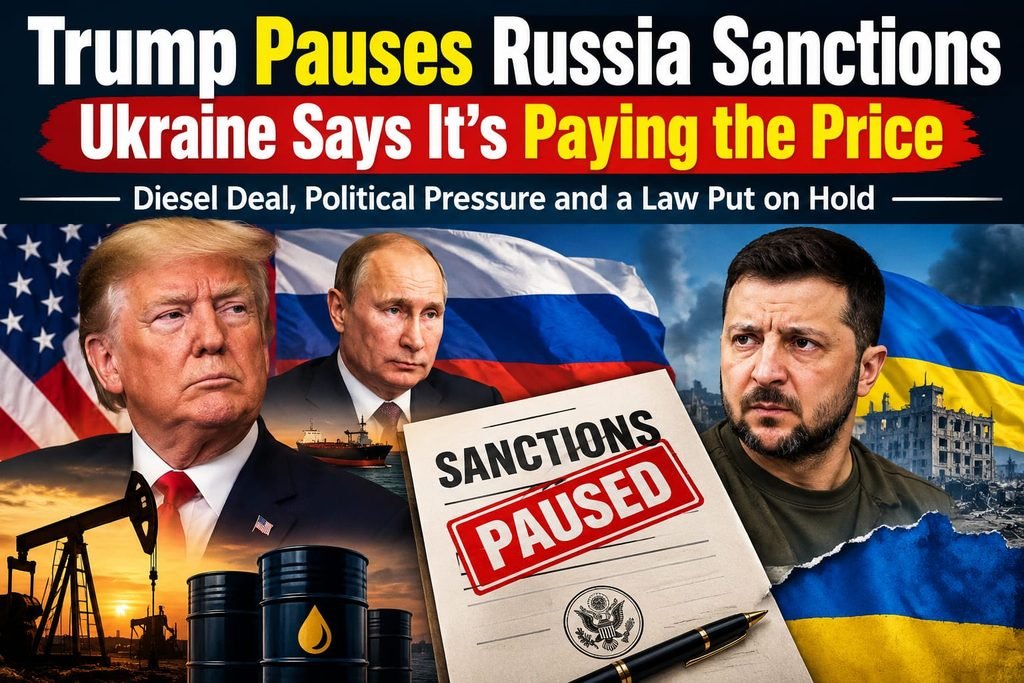
Late Friday, Trump signed an executive order waiving the new sanctions and tariffs on Russia required by the law named for the late Sen. Lindsey Graham, two days before they were set to take effect. The order does not lift sanctions already in place, but it gives the administration much wider room to decide which measures to keep. (abcnews) (abcnews)
What the order does
The Lindsey O. Graham Sanctioning Russia and Iran Act cleared the Senate on August 7 by 86 to 11. The House agreed to the Senate’s version on September 16 by 262 to 159, and Trump signed it into law on September 18. (Wikipedia)
The law’s centerpiece was an economic squeeze on the buyers of Russian energy. Tariffs of 100% on the world’s five largest importers of Russian crude oil and natural gas were due to start Sunday. Graham, who died before the bill passed, mainly targeted big purchasers such as China, India and Turkey. The statute also authorized steep duties on Russian goods, with an increase of up to 500%. (Trump waives tariffs on largest buyers of Russian oil, days before Lindsey Graham-backed law was set to take effect – CBS News +2)
The president used a safety valve written into the law. He must submit an unclassified report to Congress explaining a waiver, and Trump’s order says the White House has done so. The order sets no end date for the waivers, which last until Trump or the secretary of state decides further action is appropriate. Measures imposed under earlier executive orders stay in force. In the order, Trump wrote that the waiver serves the national interests of the United States. (Zelenskyy says Trump is ‘rewarding Putin’ as he waives new Russia sanctions passed by Congress +3)
The diesel connection
The waiver did not come out of nowhere. Eight days earlier, on October 9, Trump announced a fuel arrangement with Vladimir Putin. Russia would immediately supply more than 300,000 tons of diesel, followed by 500,000 tons in November and a million tons after that, with another 3 million tons possible later, depending on the state of its refineries. Those figures are Trump’s own, and Moscow has offered few details. (CNBC)
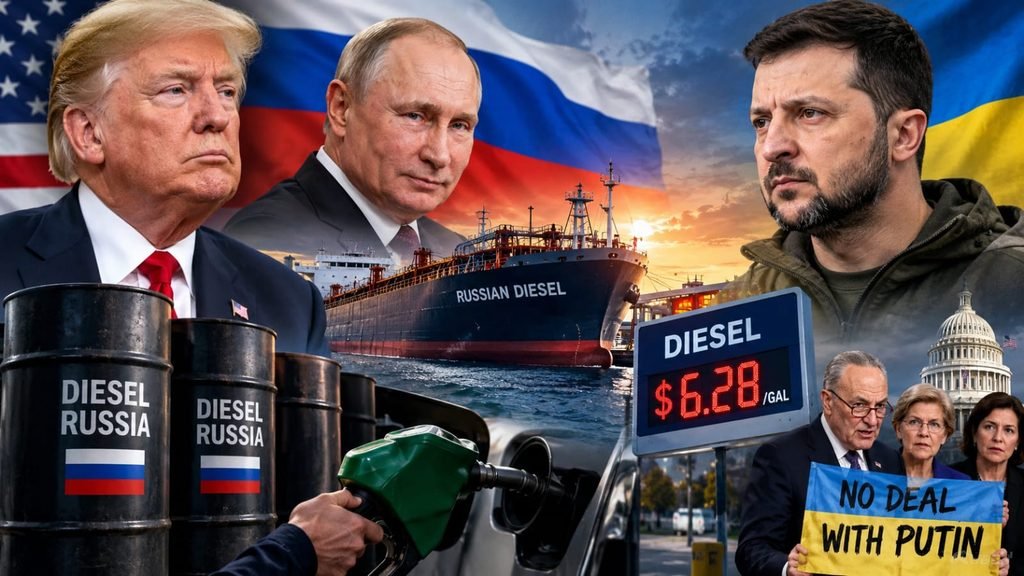
The motive is largely economic and political. The national average for diesel was still $6.23 a gallon, according to AAA, after a record $6.52 on September 22. Trump faces mounting pressure to bring fuel costs down ahead of the November midterms. Prices have been driven up by the war in Iran, and by Ukrainian strikes on Russian refineries that pushed Moscow to ban diesel exports. (Trump says U.S. to get diesel from Russia, relaxing pressure on Moscow to ease prices before midterms +2)
Whether the deal can deliver is doubtful. One analyst told Al Jazeera that the promised volumes barely move the needle, given that the US burns roughly 3.7 million barrels of diesel a day. A Forbes analysis reached a similar conclusion, saying the scale is unlikely to change the price picture before the midterms. (Al Jazeera) (Forbes)
Pushback from both parties
Opposition was building before Friday. A dozen senators, including Republicans Mitch McConnell, Thom Tillis, Susan Collins, Lisa Murkowski and John Cornyn, urged Trump on Tuesday to rescind the diesel deal and carry out the law’s sanctions. In that earlier statement, the group called the diesel waivers a betrayal of the Ukrainian people. (iranintl) (CBS News)
After the order, Tillis, who is leaving the Senate at the end of his term, called it “beyond irresponsible.” Sen. Richard Blumenthal, a Connecticut Democrat who helped draft the law, said Trump “stands on the side of a bloodthirsty thug.” (NBC News) (CNBC)
The criticism has turned into legislation. On October 16, Rep. Gregory Meeks, the top Democrat on the House Foreign Affairs Committee, introduced bipartisan legislation to block the diesel purchase. Any such bill would need to clear both chambers and survive a likely veto, so its prospects are uncertain. (rferl)
The bill’s passage was never frictionless, either. Many Democrats voted against it because it handed the president new tariff powers. That gave the White House the discretion it has now exercised. (NBC News)
Kyiv’s response
Ukrainian President Volodymyr Zelenskyy spoke Saturday during a European Union summit in Brussels. He said the decision “rewards” Putin and warned that Moscow is trying to leave millions of Ukrainians without heat and electricity before winter. He added that Russia had hit 15 critical power generation facilities across Ukraine the same day, in one of the largest attacks on the grid. He also said he feared Washington could lift more sanctions. (Zelensky: Trump’s Sanctions Waiver Rewards Putin as Russia Eyes Ukraine Blackout +2)
The European Union’s side was blunt. European Council President Antonio Costa said it was no time to relieve sanctions on Russia and that Europe should increase pressure instead. (deccanchronicle)
Russian officials celebrated. Kirill Dmitriev, an envoy for Putin, called the suspension “important and truly historic.” The Kremlin and Putin had not reacted directly as of Saturday. (arabnews) (anews)
What to watch
Several questions will shape the fallout.
Whether the waiver is reversible. Reporting indicates the president has kept the power to bring the measures back. The open-ended timeline means the decision rests entirely with the White House. (foxbusiness)
Whether the diesel actually flows. Russia’s refining capacity is damaged, and the larger volumes Trump cited come with conditions. If deliveries fall short, the administration will have given up leverage and gained little at the pump.
How Congress responds. Criticism has crossed party lines, but statements are cheaper than votes. The Meeks bill and the senators’ letter are the first test of whether anger turns into action.
What happens on the battlefield. Zelenskyy had said Ukraine would observe an energy ceasefire, but after Russian attacks continued he said earlier this week that Kyiv would resume hitting Russian refineries. That cycle ties Ukrainian strikes to fuel prices abroad, and prices to the political calculations in Washington. (CBS News)
The bottom line
The administration’s case is that fuel costs are squeezing American households, that the law explicitly allows a national-interest waiver, and that existing sanctions remain. Critics counter that the law’s authors meant it to bind Moscow’s economy, not to be shelved as soon as it became inconvenient, and that Russia is being rewarded while it escalates against Ukraine’s power grid.
Both claims hold some truth, and the law’s language makes the waiver legal. Whether it is wise is the question members of Congress, allied governments and voters are now weighing, with the midterms only weeks away.